{
“@context”: “https://schema.org”,
“@type”: “Article”,
“headline”: “Drone as First Responder (DFR): How Programs Work, What They Cost, and Who Is Buying”,
“description”: “How DFR programs work, the FAA waivers they need, and what agencies actually pay. Real contract records from $37,066 to $2.2 million.”,
“author”: {“@type”: “Person”, “name”: “Abbas Khan”},
“publisher”: {“@type”: “Organization”, “name”: “Civic IQ”},
“datePublished”: “2026-09-12”,
“dateModified”: “2026-09-12”,
“mainEntityOfPage”: {“@type”: “WebPage”, “@id”: “https://civiciq.com/blog/drone-as-first-responder”}
}
{
“@context”: “https://schema.org”,
“@type”: “BreadcrumbList”,
“itemListElement”: [
{“@type”: “ListItem”, “position”: 1, “name”: “Blog”, “item”: “https://civiciq.com/blog”},
{“@type”: “ListItem”, “position”: 2, “name”: “Drone as First Responder”, “item”: “https://civiciq.com/blog/drone-as-first-responder”}
]
}
{
“@context”: “https://schema.org”,
“@type”: “FAQPage”,
“mainEntity”: [
{“@type”: “Question”, “name”: “How can a drone be a first responder?”, “acceptedAnswer”: {“@type”: “Answer”, “text”: “A drone is stored in a rooftop dock. Dispatch software launches it the moment a 911 call is coded. It flies to the address on its own and streams live video to dispatch and to officers driving to the scene. A remote pilot supervises the flight from a command center.”}},
{“@type”: “Question”, “name”: “How fast is a DFR drone compared to a patrol car?”, “acceptedAnswer”: {“@type”: “Answer”, “text”: “Chula Vista Police report an average drone response time of 148 seconds on its public dashboard. Vendors advertise arrival in under 90 seconds inside a two-mile radius. Patrol response varies widely by city, so compare against your own dispatch data rather than a vendor figure.”}},
{“@type”: “Question”, “name”: “Are DFR drones autonomous or pilot-operated?”, “acceptedAnswer”: {“@type”: “Answer”, “text”: “Both. The aircraft flies the route itself. A certificated remote pilot stays responsible for the flight and can take control at any point. FAA waivers are written around that supervision, which is why staffing is a real budget line.”}},
{“@type”: “Question”, “name”: “Can police fly a drone over your house?”, “acceptedAnswer”: {“@type”: “Answer”, “text”: “Flight over private property is generally lawful, and what the camera records is governed by state law and department policy. California requires agencies to publish a use policy before buying under AB 481. Several departments publish flight paths and the call that triggered each launch.”}},
{“@type”: “Question”, “name”: “What FAA approval does a DFR program need?”, “acceptedAnswer”: {“@type”: “Answer”, “text”: “Routine flying uses Part 107. A DFR program also needs approval to fly beyond visual line of sight. Most agencies now get that through the Part 91.113 waiver the FAA streamlined in April 2025. Night operations need extra approval.”}},
{“@type”: “Question”, “name”: “How much does a DFR program cost?”, “acceptedAnswer”: {“@type”: “Answer”, “text”: “Purchase records reviewed by Civic IQ run from $37,066 to $2.2 million in total contract value. Most single-agency programs land at $50,000 to $250,000 per year. Docks, software licensing and pilot time drive the recurring half.”}},
{“@type”: “Question”, “name”: “Which agencies have DFR programs?”, “acceptedAnswer”: {“@type”: “Answer”, “text”: “More than 1,000 agencies held the waivers needed to run one as of February 2026, according to an FAA records release obtained by EFF. Chula Vista, Montgomery County, Omaha, Rochester and Campbell all run documented programs.”}},
{“@type”: “Question”, “name”: “What is the difference between DFR and a police drone unit?”, “acceptedAnswer”: {“@type”: “Answer”, “text”: “A traditional unit drives a drone to a scene in a case and flies it within sight. A DFR program keeps aircraft pre-positioned in docks, launches them from dispatch, and flies them beyond visual line of sight. The difference is dispatch integration and the waiver.”}}
]
}
Last updated: September 12, 2026
Quick Answer
A drone as first responder (DFR) program launches an aircraft from a fixed dock the moment a 911 call is coded, flies it to the address without a pilot on scene, and streams live video to dispatch before officers arrive.
- More than 1,000 agencies held the needed waivers as of February 2026. The FAA had issued just 976 in the seven years before April 2025. The records were released to EFF.
- Purchase records reviewed by Civic IQ run from $37,066 to $2.2 million in total contract value, with most single-agency programs landing at $50,000 to $250,000 per year.
- Chula Vista Police report an average response of 148 seconds. Their own dashboard shows two routine call types make up 52.56% of launches.
The story of drone as first responder is not really a story about flight time. It is a story about paperwork. In April 2025 the FAA replaced a slow, custom waiver process with an email request and a checklist. Adoption changed shape almost immediately.
From the first program in 2018 through April 2025, the FAA granted 976 DFR waivers. In the ten months that followed, the count passed 1,000 agencies. That is the inflection, and it is why procurement teams are seeing these requests now.
This guide covers how the programs work, what the FAA actually requires, and what agencies are paying. The cost section draws on real purchase records, which is the part most published guides leave out.
What is a drone as first responder (DFR)?
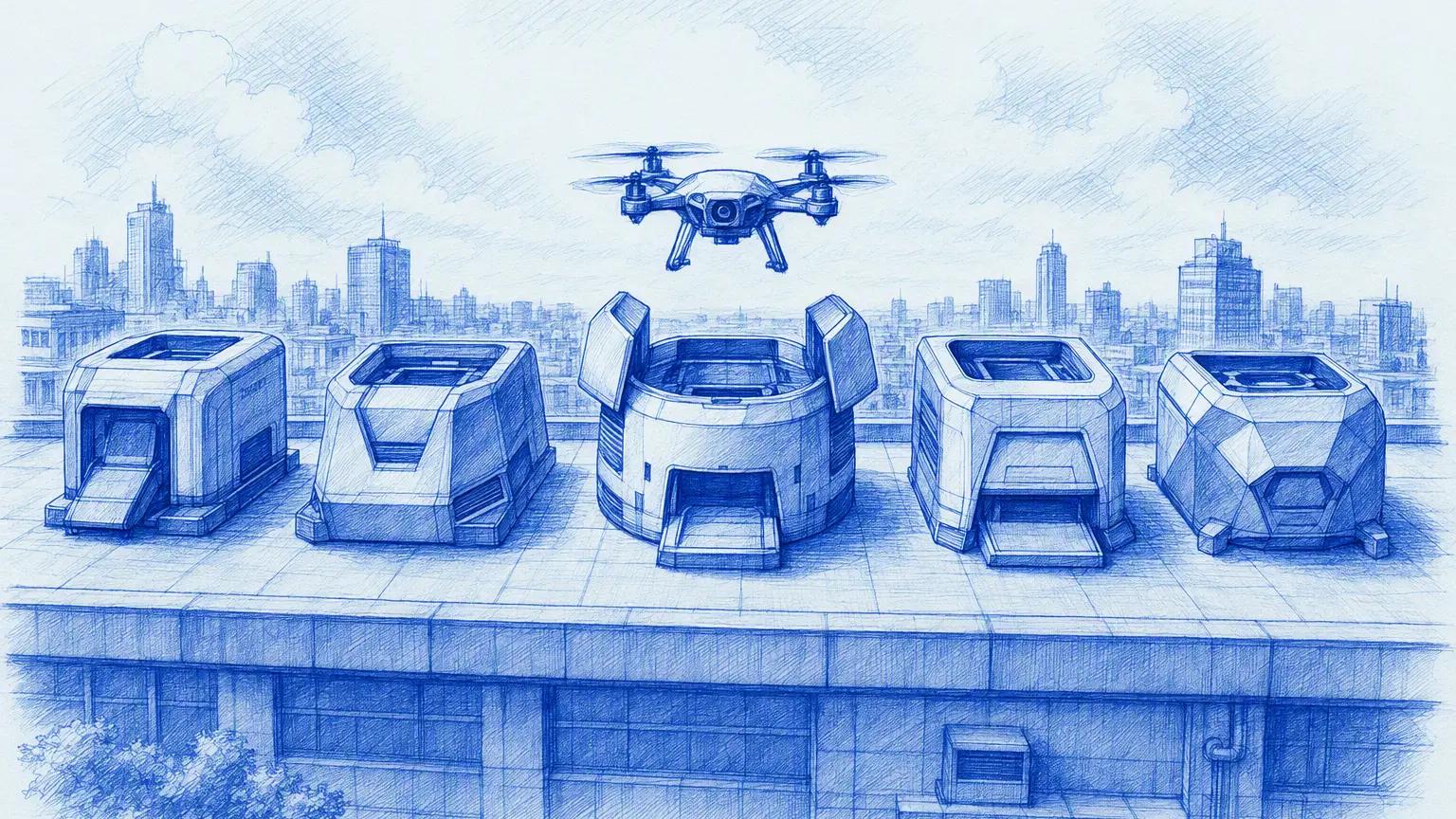
A drone as first responder program is a dispatch system with an aircraft attached. Drones sit in weatherproof docks on rooftops around a city. When a call comes in, the nearest one launches and flies to the address on its own, while a remote pilot supervises from a desk.
The drone usually arrives before the patrol car. It streams video to dispatch, to laptops in responding units, and often to a command center. Officers learn what they are driving into.
How DFR differs from a Part 107 drone unit
Most agencies already own drones. An officer keeps one in a case, drives it to a scene, and flies it within sight. That is a Part 107 unit, and it is a tool an officer carries.
DFR is different in three ways. The aircraft is pre-positioned rather than transported. The launch is triggered by dispatch software rather than by a person on scene. And the flight goes beyond the pilot’s line of sight, which requires a waiver.
That last point is the one that shapes the budget and the timeline. A drone unit is a purchase. A DFR program is a purchase plus an approval plus a staffing plan.
Who operates a DFR program
Police departments run most programs today. Fire and EMS agencies are joining, sometimes on shared contracts. One South Carolina agreement reviewed by Civic IQ in July 2026 put a single drone, dock and software package to work for both the police and fire departments under one five-year plan.
Joint deployments matter for procurement. Two departments sharing one dock network changes who signs, who pays, and which budget the recurring license lands in.
How does a DFR call actually run?
The sequence is short and mostly automatic. Five things happen between the 911 call and live video.
The 911 call and the CAD trigger
A caller reaches dispatch. The call taker codes the incident in the computer aided dispatch system, and that record carries the address and the call type. DFR software reads it and offers a launch.
This integration is the whole program. Without a clean link into CAD, a drone is just a drone. Agencies weighing this should look closely at their existing CAD and RMS platform contracts, because the integration path often depends on that vendor.
Autonomous launch from the dock
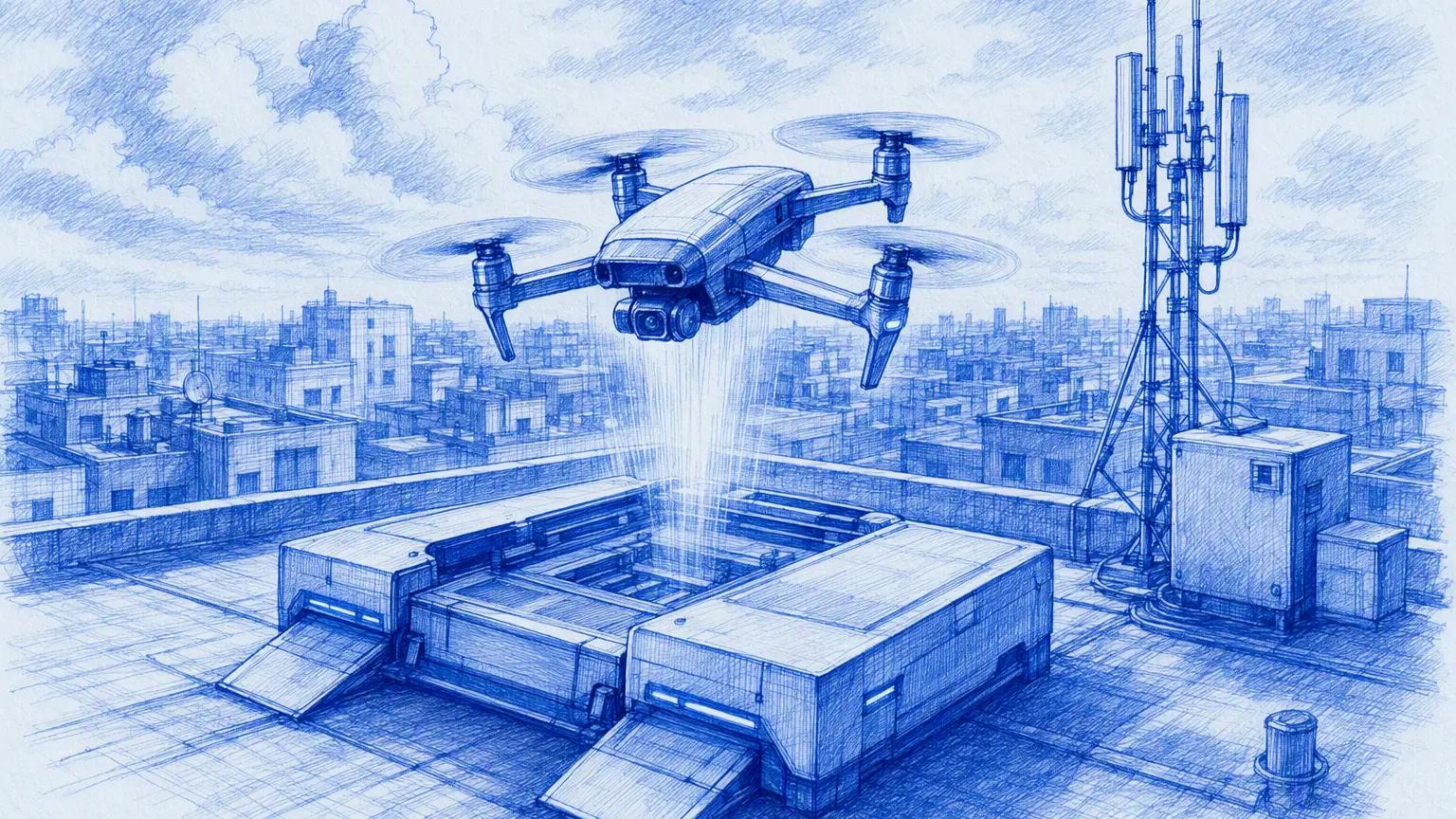
The dock opens and the aircraft lifts off. Docks are climate controlled and charge the battery between flights, which is what makes round-the-clock readiness possible. Siting them is a real project, since each one needs power, network and roof access.
Remote pilot handoff
A certificated remote pilot supervises the flight. That pilot may sit in a command center, a real time crime center, or at a dispatch console. They can take manual control whenever the situation calls for it.
Pilot staffing is the cost line agencies underestimate. The aircraft is cheap next to a person watching screens across every shift.
Who sees the feed
Dispatch sees it first. Responding officers get it on mobile data terminals in their cars. Command staff can watch from the station, and some agencies push the feed to a real time crime center where analysts pair it with other data.
The point of all this is situational awareness before arrival. A supervisor deciding how many units to send now has a picture instead of a description.
Time to live video
Vendors advertise arrival in under 90 seconds within a two-mile radius. The best public number comes from Chula Vista Police, whose dashboard reports an average response time of 148 seconds across the longest-running program in the country.
Treat both figures as starting points. Dock placement, airspace and weather move the number more than the airframe does.
What FAA approvals does a DFR program need?
This is where programs stall, and it is the part vendor pages describe loosely. There are three layers, and one of them changed recently.
Part 107 and the line-of-sight limit
Part 107 is the baseline rule for small commercial and public drone flights. It requires the pilot to keep the aircraft in visual line of sight. Every DFR pilot needs the certificate, but the rule alone cannot support a DFR program.
What beyond visual line of sight approval unlocks
Beyond visual line of sight, usually shortened to BVLOS, is the permission to fly past what the pilot can see. It is what turns a rooftop dock into a response asset covering a district. Most public safety approvals come through a waiver under Part 91.113.
Approvals are conditional. Each one names an altitude ceiling, a set of boundaries, and what the drone must be able to detect. Two agencies with the same gear can hold very different rights.
What changed in April 2025
The FAA made the 91.113 waiver simpler for public safety work. Agencies now ask by email and fill in a checklist. Before that they had to build a custom safety case, which took months.
That single administrative change is the reason this market moved. It converted a research project into a form.
The waiver numbers
The FAA granted 976 DFR waivers between 2018 and April 2025. By February 2026, more than 1,000 agencies held a Part 91 waiver. The FAA issued more in those ten months than in the prior seven years.
Those counts come from FAA records obtained by the Electronic Frontier Foundation, which posted the spreadsheet and a map. The Law Enforcement Drone Association counts about 6,000 police drone programs of all kinds. That is four times its late-2024 count.
Night operations and what is still pending
Campbell Police in California were the first US agency cleared to fly BVLOS at night. That came in October 2024, per the city’s own announcement. The approval paired ground radar with optical sensors, so one pilot could work without a spotter. Trade coverage at the time called it the first waiver to clear round-the-clock flight.
A broader rule, Part 108, would replace one-off waivers with a standing set of rules. It is not law yet. The draft came out in August 2025 and comments closed that October. The final rule has sat in review since July 2026. Guides that promised it in March 2026 are out of date. The waiver is still the only path.
What do agencies use DFR for?
Law enforcement
Overwatch before entry is the headline use. A drone above a building shows officers the exits and who is nearby. Crews also track fleeing cars from a safe height. Others map crash scenes from the air.
Fire
Fire crews use thermal cameras for size-up. From above, a commander can find the seat of a fire. They can judge how fast it spreads. They can also see whether a roof is still safe to stand on.
Wildfire spotting is becoming its own case. Laguna Beach funded a $375,000 study in September 2025. It looked at using drone response to catch fires early. The record was reviewed by Civic IQ.
EMS and search and rescue
Search teams cover ground faster from the air. Thermal sensors help most at night. Some aircraft carry a small payload such as an AED or a float. For a small agency the drone is a force multiplier when there are too few people to search.
What the call data actually shows
The marketing describes active shooters and armed suspects. The flight data is quieter. Chula Vista’s public dashboard shows one call type above all: a person causing a disturbance, at 36.85% of launches. Welfare and mental health checks add another 15.76%.
Together those two types are 52.56% of all DFR launches. Assault calls are about 6%. Chula Vista also reports it skipped sending a patrol car on 4,303 calls. That is a real result. It is just not the one on the brochure.
Plan for the call mix you will actually get. A program justified on rare high-risk incidents will be measured on routine ones.
Which agencies run DFR programs today?
Chula Vista launched the first program in 2018. It is still the reference point. The table below lists programs with a public record behind each one.
| Agency | State | Started | Notable |
|---|---|---|---|
| Chula Vista Police | CA | 2018 | First in the US. Publishes a flight dashboard. 148-second average response |
| Campbell Police | CA | 2022 | First night BVLOS approval, October 2024. Uses radar plus optical sensors |
| Montgomery County Police | MD | Nov 2023 | Publishes flight paths and the call number behind each launch |
| Rochester Police | MN | 2025 | Led all Minnesota agencies in non-warrant drone flights in 2025 |
| City of Omaha Police | NE | Nov 2025 | First in Nebraska; funded by two foundation grants |
| Palm Springs Police | CA | Expanded 2025 | Largest radar-covered city area in the US, at 37 square miles |
| Town of Queen Creek | AZ | 2024 | Whole DFR system, including training and support |
| James City County Police | VA | 2026 | Bought dock, install and a five-year license as one package |
Two things stand out here. The older programs publish their flight data. The newer ones buy whole systems instead of aircraft.
How much does a DFR program cost?
Purchase records reviewed by Civic IQ run from $37,066 to $2.2 million in total contract value. Most single-agency programs land at $50,000 to $250,000 per year. The spread is wide. Agencies buy very different things under the same label.
What you are actually paying for
Five things show up in nearly every deal. Aircraft, docks, software licensing, pilot training, and network service. The yearly half tends to dominate over a full term. Which vendor you pick changes that mix, and we break the five main platforms down in our comparison of DFR companies.
James City County’s February 2026 purchase shows the shape. It paid $46,200 once for dock gear, install and training. Then $7,900 a year for a five-year license. Total: $54,100. Compare that to Queen Creek, Arizona, which bought a whole system at $245,000 in 2024. Same category. Very different scope.
How agencies fund it
Grants carry a striking share of these programs. Rochester Police took a $467,000 Mayo Clinic grant. It funds two drones, docks, gear and software through 2030. Omaha took $515,348 from its police foundation. That came on top of a $1,456,116 award approved in August 2025.
Capital budgets and public safety levies cover the rest. Victorville used state money for an $832,000 three-year deal. Newport Beach put up $2.17 million over five years from its own budget.
A third shape is showing up too: the flat annual subscription. Ferguson, Missouri passed a resolution for a $49,000 yearly fee covering its drone response service. There is no big capital line in that model. The whole program sits in the operating budget instead. For a small city that is often the only way it passes.
Which procurement route agencies take
Three routes dominate. The choice moves the timeline more than the price. Sole source is common when a department already runs a vendor’s cameras. The Town of Normal waived formal bidding in July 2026 for a $50,000 buy on that basis.
Co-op contracts are the quiet favorite. Palm Springs bought a dock and software for $37,065.94 on a Sourcewell deal. It runs two years from September 2025, with two one-year options. No bid process. No delay.
Bigger programs still go out to bid. Williamson County in Tennessee and the City of Palm Desert in California both have open DFR bids as of September 2026. Vendors are also lowering the first step. One offered an $8,000 thirty-day trial in May 2026. A rival ran free pilots.
Governance and community approval
In California, AB 481 sets the order. An agency must publish a use policy and get council approval before it buys. A yearly use report follows. Montgomery County spent a summer on community meetings before it launched that November.
Budget the approval calendar too. A council cycle can add months. No vendor timeline accounts for that.
How do you launch a DFR program?
The order matters. Buy hardware first and you will wait on paperwork later.
- Mission analysis. Pull your own call data and find which call types a drone would actually change.
- Community and council sign-off. Where state law requires it, publish the use policy first.
- Part 107 licences. Get pilots certified before you need them.
- BVLOS waiver. Apply under the faster Part 91.113 path for public safety.
- Dock siting. Confirm power, network and roof access at each location.
- CAD link. Check that the launch trigger works with your dispatch system.
- Written SOPs. Define who can launch, for which call types, and what happens to the video.
- Scenario training. Run the calls you actually get, including the routine ones.
- Public flight data. Publish it from day one, not after the first complaint.
What are the privacy objections to DFR?
The objections are serious. A camera over a neighborhood records backyards and roofs. Sometimes it records what can be seen through a window. Most of those people called nobody.
How long footage is kept is the second concern. Held long enough, it becomes a searchable record of a block. Departments have leaked drone video before. Critics also warn about pairing aerial video with plate readers. That turns a response tool into a tracking network.
The EFF tracks these programs in its Atlas of Surveillance. It argues the waiver surge arrived with no matching privacy floor. Agencies that keep public trust tend to answer with specifics. A published policy. A flight dashboard. A short clock on footage. A real yearly report.
For vendors, this is more than a messaging problem. It is a buying requirement. A program that cannot survive a council hearing never reaches contract.
Open RFPs related to this topic
Live opportunities surfaced by Civic IQ as of September 2026. Status changes daily.
- Williamson County Uncrewed Aircraft Systems (UAS) Services Bid 2026, Williamson County, TN (due 2026-09-11)
- Williamson County Unmanned Aircraft Systems For Aerial Prescribed Fire Bid 2026, Williamson County, TN (due 2026-09-23)
- Williamson County 1 Skydio X10-VT300Z Drone for Natural Resources Bid 2026, Williamson County, TN (due 2026-09-23)
- Williamson County Purchase of Oceanbotics SRV-8X-ROV and Associated Components and Support 2026, Williamson County, TN (due 2026-09-22)
- Williamson County DJI Matrice 4TD Thermal Drones ET Bid 2026, Williamson County, TN (due 2026-09-14)
Frequently asked questions about drone as first responder programs
How can a drone be a first responder?
A drone sits in a rooftop dock. Dispatch software launches it the moment a 911 call is coded. It flies to the address on its own and streams live video to dispatch and to officers driving over. A remote pilot supervises from a command center.
How fast is a DFR drone compared to a patrol car?
Chula Vista Police report an average drone response of 148 seconds on their public dashboard. Vendors advertise arrival in under 90 seconds inside a two-mile radius. Compare either number against your own dispatch data before using it in a business case.
Are DFR drones autonomous or pilot-operated?
Both. The aircraft flies the route itself while a certificated remote pilot stays responsible and can take control. FAA waivers are written around that supervision, which is why pilot staffing is a real budget line rather than a rounding error.
Can police fly a drone over your house?
Flying over private property is generally lawful. What the camera records and how long it is kept is governed by state law and department policy. California requires a published use policy before purchase, and some departments post flight paths and the call behind each launch.
What FAA approval does a DFR program need?
Routine flying uses Part 107. A DFR program also needs approval to fly beyond visual line of sight, which most agencies now obtain through the Part 91.113 waiver the FAA streamlined in April 2025. Night operations require additional approval.
How much does a DFR program cost?
Purchase records reviewed by Civic IQ run from $37,066 to $2.2 million in total contract value, with most single-agency programs landing at $50,000 to $250,000 per year. Docks, software licensing and pilot time drive the recurring half of that.
Which agencies have DFR programs?
More than 1,000 agencies held the required waivers as of February 2026, per FAA records released to the EFF. Documented programs include Chula Vista, Campbell, Montgomery County, Rochester, Omaha, Palm Springs, Queen Creek and James City County.
What is the difference between DFR and a police drone unit?
A traditional unit drives a drone to a scene and flies it within sight. A DFR program keeps aircraft in docks, launches them from dispatch, and flies beyond the pilot’s line of sight. Dispatch integration and the waiver are the real differences.
Where this goes next
More than 1,000 agencies now hold the approval they need. Most have not bought a program yet. In practice the waiver list is a public roster of buying intent.
The signal that matters comes before the bid. It shows up as a policy item on a council agenda. Or a grant the city accepts. Or a line in a capital plan. Civic IQ tracks those documents, which is how every contract here surfaced.
If you sell into public safety, three neighbors are worth reading. Our look at what agencies are actually buying in 2026. The early signals in CAD and RMS buys. And our breakdown of Axon’s public sector footprint.