
4 Best Cloverleaf AI Alternatives in 2026 (SLED & B2G Sales)
The short answer
Cloverleaf AI reads public government meetings across 70,000+ agencies and is good at it. Teams look elsewhere when monitoring is not their only gap. For the signal plus the spend record, the contact, the sequence, and the active RFP, Civic IQ. For one broad go-to-market suite, Starbridge. For historical spend benchmarking, GovSpend. For analyst-curated federal and SLED pursuit records, GovWin IQ. Match the alternative to the gap you actually have.
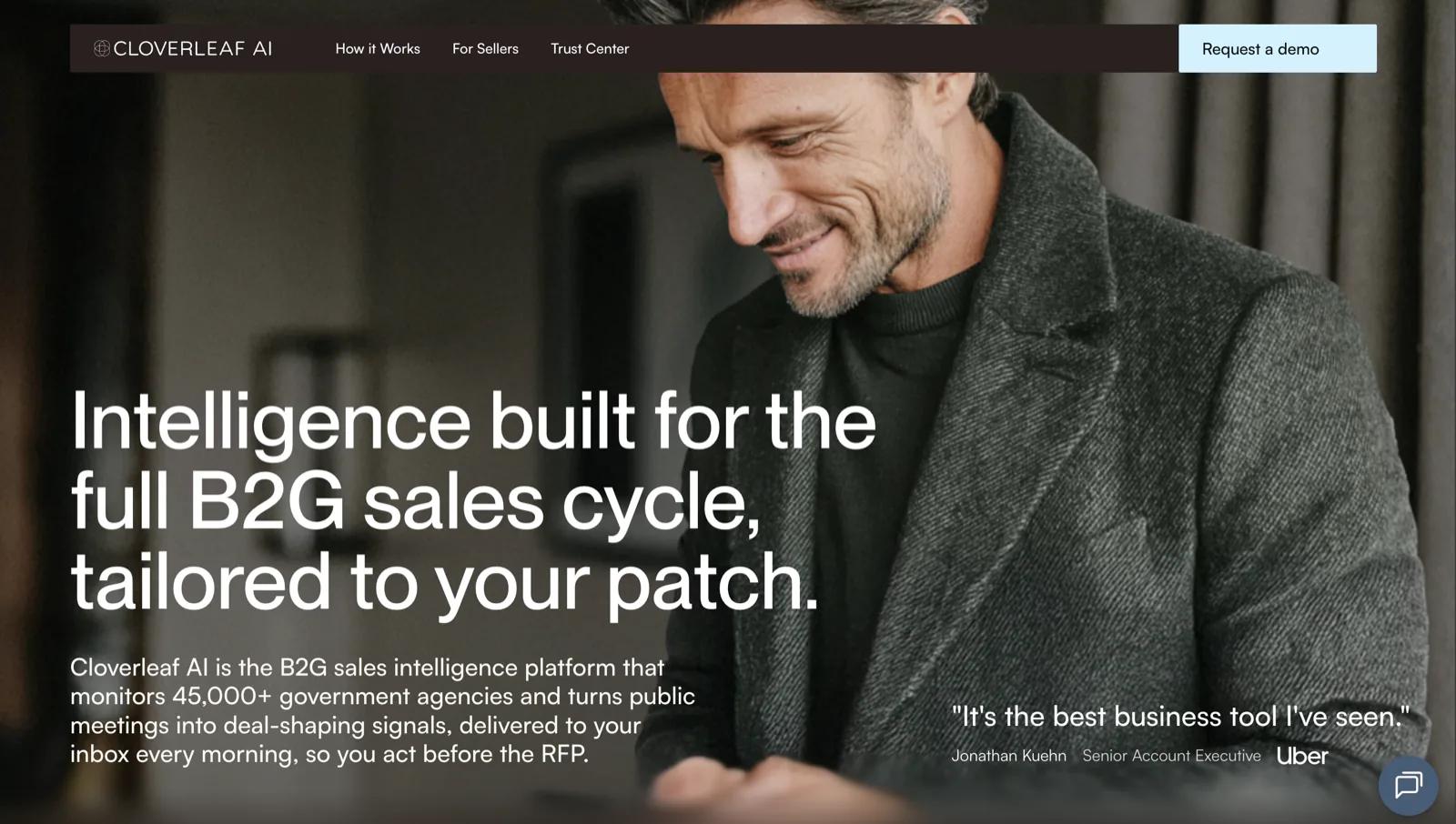
Cloverleaf AI is a focused product solving a real problem: nobody can read every board meeting in their territory. It transcribes public meeting video and captures the surrounding documents across 70,000+ agencies by its own account, and delivers the result as a daily digest. If that is your gap, it is covered, and this guide says so plainly.
Teams evaluate alternatives for four consistent reasons: the signal arrives but stalls for want of a contact, a spend record, or a sequence; they want one broad suite instead of a single-purpose tool; they need historical spend and pricing benchmarks; or they need analyst-curated pursuit records across a wider public-sector footprint. This guide compares the four strongest Cloverleaf AI alternatives in 2026, organised by which of those you're after. We build one of them (Civic IQ, #1 here for teams that need to act on the signal, and we name where Cloverleaf and the others beat us).
Cloverleaf AI alternatives at a glance
| Alternative | Best for | What it adds over meeting-only monitoring |
|---|---|---|
| 1.Civic IQ | Teams that need to act on the signal, then close it | Purchase order and spend records, agency contacts, outreach sequencing, and active RFP search |
| 2.Starbridge | Teams wanting one broad go-to-market suite | Wide entity directory plus proposal and outbound tooling |
| 3.GovSpend | Spend benchmarking and pricing research | Historical purchase data across SLED; weaker on early signals |
| 4.GovWin IQ | Large teams with analyst budgets | Analyst-curated pursuit records across a broader public-sector footprint |
| Cloverleaf AI (reference) | Meeting monitoring as the whole product | Vocal Fingerprinting on named officials; pre-RFP Opportunity Database |
Why teams look for a Cloverleaf AI alternative
Cloverleaf AI does one job and does it well, so the reasons teams look elsewhere are rarely about the monitoring itself.
They cluster into three:
The signal arrives and then stalls
A meeting alert lands in an inbox. Acting on it means finding the right contact, checking whether the agency has any budget history in your category, and building a sequence in a different tool. Teams that keep hitting that wall want the next steps in the same system.
No spend or purchase record behind the signal
A meeting tells you there is interest; a purchase order tells you there is budget, who the incumbent is, and when the term ends. Cloverleaf's public materials don't describe purchase order or spend datasets, so the qualifying step happens elsewhere.
Pre-RFP only, not the active solicitation
Cloverleaf markets an Opportunity Database capturing opportunities before they reach the RFP stage. When a tracked deal finally posts as a bid, you need the document, the deadline, and the contact in one place, and its materials don't describe active-solicitation search.
If none of those apply, and reading every meeting is genuinely the only gap you have, Cloverleaf AI is a reasonable choice and you can stop here.
Methodology
How we evaluated these alternatives
We scored each platform on what happens across the whole motion: meeting and pre-RFP signal quality, whether spend and purchase records are available to qualify the signal, contact data you can build a list from, whether outreach can be sent from the platform, active solicitation search, and programmatic access for AI agents. Sources: vendor documentation and public materials, funding announcements, third-party listings, and our own testing. Where we're the vendor, we say so, and we state Cloverleaf AI's genuine advantages rather than pretending they don't exist. Capabilities a vendor doesn't describe publicly are recorded as not described, not as absent.
1. Civic IQ: best for teams that need to act on the signal
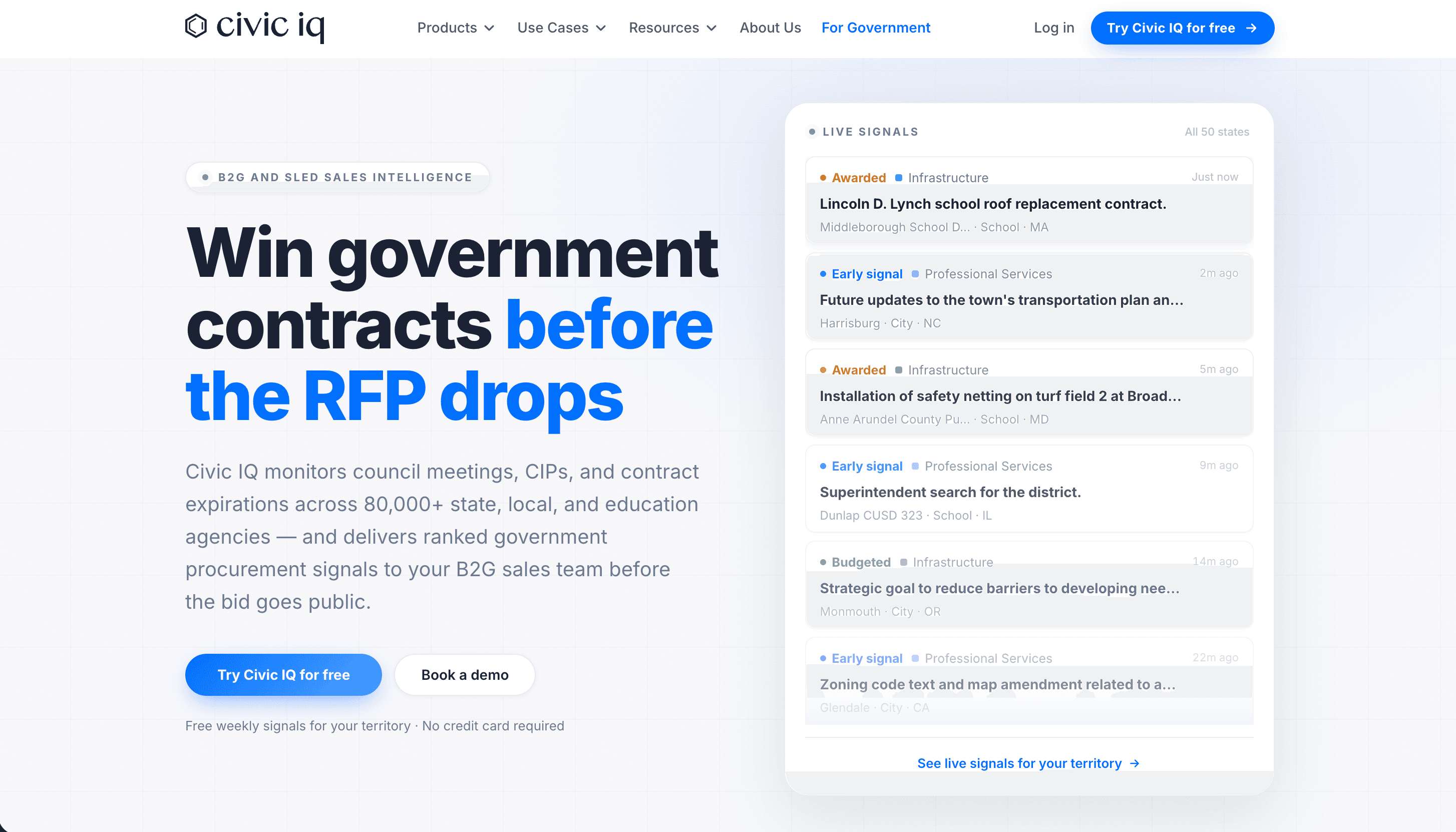
Verdict: Civic IQ is the alternative for teams whose problem is not seeing the meeting but doing something with it. It monitors the same public meetings across 100,000+ agencies, then carries the signal forward: the vendor spend and purchase record behind it, the agency contact to email, a sequence that sends from the rep's own mailbox, the active solicitation when it posts, and an MCP server so your own AI agents can query all of it directly.
This is our product; here's the honest comparison.
| Civic IQ | Cloverleaf AI | |
|---|---|---|
| Core bet | Signal to closed pipeline | Meeting intelligence |
| Public meeting monitoring | Yes, core product | Yes, core product |
| Agencies monitored | 100,000+ (self-reported) | 70,000+ (self-reported) |
| Speaker tracking | Not offered | Vocal Fingerprinting, 200,000+ speakers |
| Spend / purchase records | Yes, with amounts and dates | Not described |
| Agency contact database | Yes, 2.6M+ contacts | Speaker ID only; none described |
| Outreach sequencing | Yes, sends from the rep's mailbox | AI copy described; no sending engine |
| Active RFP search | Yes, active and past | Not described |
| MCP server | Yes, live for Claude, ChatGPT, and any MCP client | Yes (announced August 2026) |
| Chrome extension | Yes, free: verified contacts and AI agency summaries in-page | Not advertised |
| Managed SDR service | Yes, Pipeline-as-a-Service: a dedicated SDR works your signals | Not advertised |
Where it beats Cloverleaf AI
Everything after the signal. Civic IQ pairs the meeting signal with the purchase record that proves budget, the contact you need to reach, a sequence that actually sends, and the solicitation when it publishes. Cloverleaf's public materials describe none of those four. Civic IQ can also work the pipeline for you: Pipeline as a Service puts a dedicated SDR on your account, making 40–50 signal-triggered calls a day and booking 4–8 qualified government meetings a month directly to your calendar, from $2,000/month on top of a platform subscription. Reps who prospect by browsing get a free Chrome extension that puts verified government contacts and an AI agency summary on the LinkedIn, Sales Navigator, and .gov page they are already reading. Both platforms now offer MCP access for AI workflows; Civic IQ's server lets Claude, ChatGPT, or your own agents query signals, spend, contracts, and contacts directly rather than through a dashboard.
Where Cloverleaf AI still wins
Vocal Fingerprinting. Cloverleaf can follow one named official across every public meeting they attend, across agencies and jurisdictions, using voice signatures from a database of 200,000+ verified public-sector speakers. Civic IQ has no equivalent, and for teams selling to a small set of officials who move between roles, that is a real reason to choose Cloverleaf.
Pricing
Civic IQ publishes its pricing: a permanent free plan with three signals a month in one state, Starter at $299/month for up to three states, and Unlimited for all 50 states, quoted by territory and seat count. Cloverleaf AI does not publish pricing and quotes per customer. Ask both for the total on the seats you actually need, plus the year-two price.
Choose Civic IQ if: you need the signal plus the spend record, the contact, the sequence, and the active RFP.
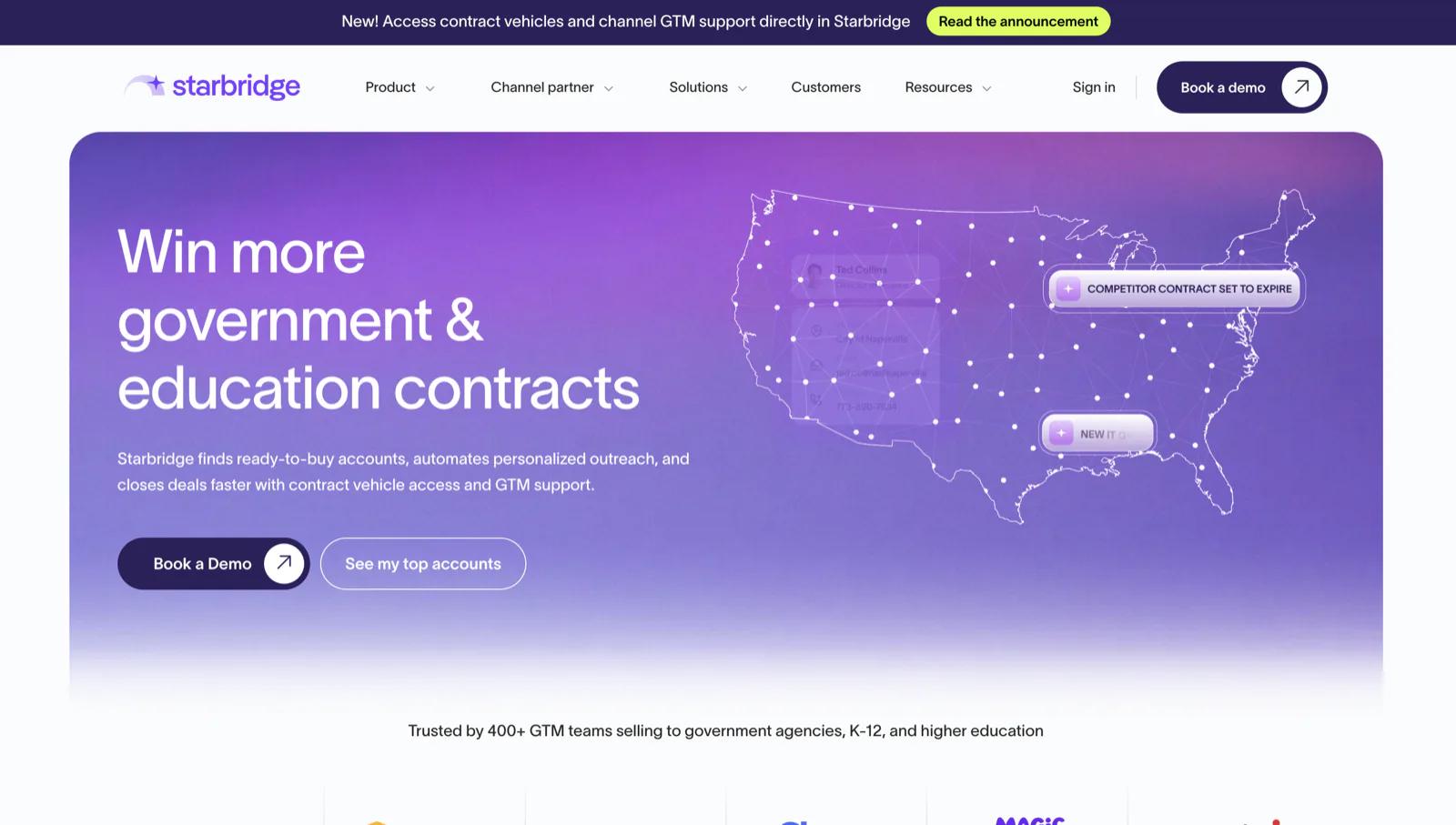
2. Starbridge: best for one broad go-to-market suite
Verdict: Starbridge is the alternative for teams that would rather buy one wide self-serve suite than a single-purpose monitoring tool. It spans signals, a large entity and contact directory, spend research, and AI proposal drafting, all run by your own team.
Where it beats Cloverleaf AI
Breadth. Where Cloverleaf covers meetings, Starbridge covers most of the go-to-market motion in one platform, including a wide entity directory plus proposal and outbound tooling.
Honest limitations
It is self-serve, so unlocking it typically needs a RevOps owner to configure ICPs, saved searches, and CRM mappings; its Sequences outbound module is a paid add-on; and it is premium-priced with no free tier. Pre-RFP signal is one module among many rather than the core product.
Choose Starbridge if: you want one broad suite your own team configures and runs end-to-end.
See our full Starbridge comparison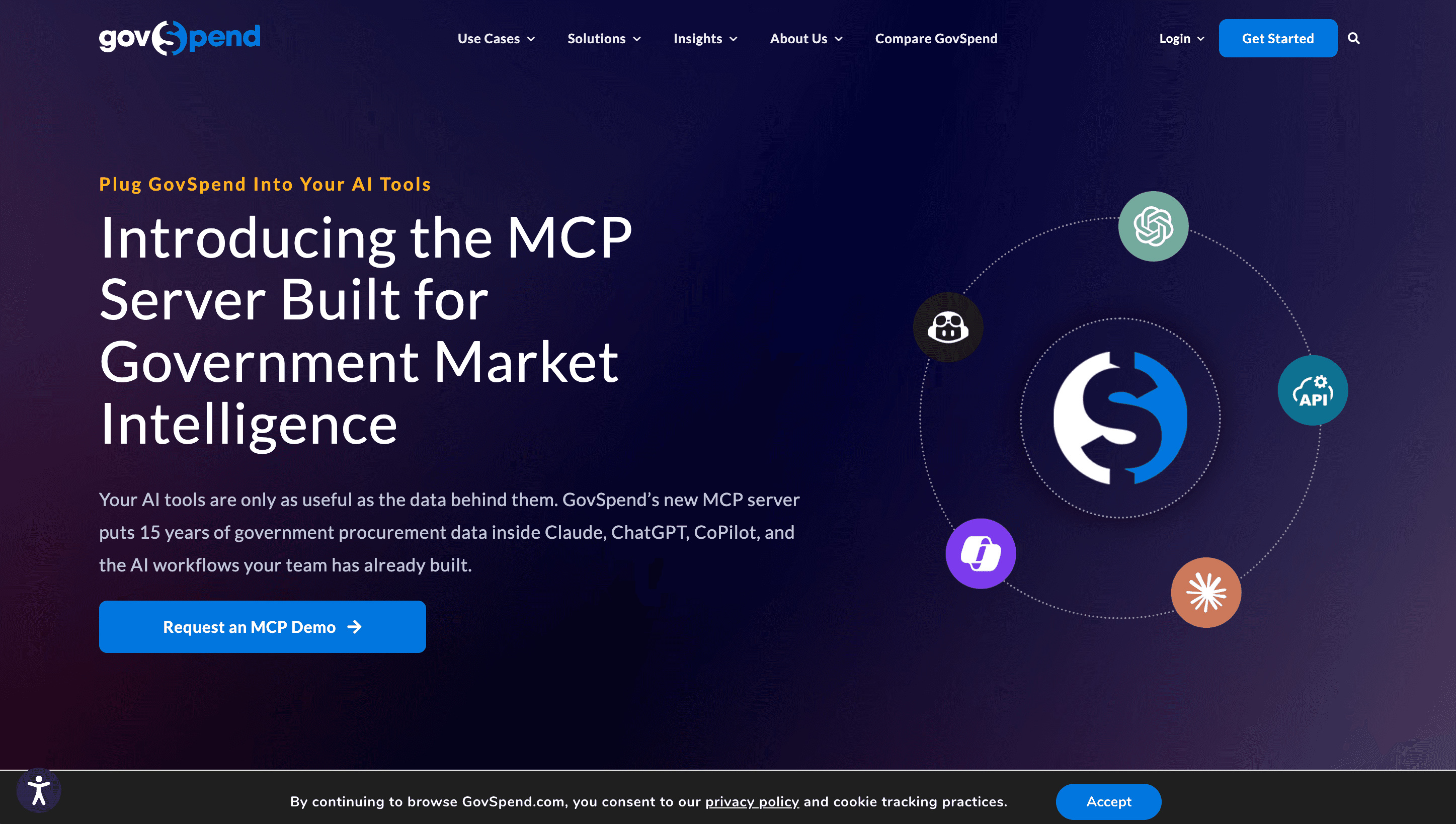
3. GovSpend: best for spend benchmarking and pricing research
Verdict: GovSpend is the alternative for teams whose question is not what an agency is discussing but what it has actually bought, from whom, and at what price. Its line-level purchase-order archive is the deepest historical spend dataset in the category.
Where it beats Cloverleaf AI
Historical purchase data across SLED, with pricing and vendor benchmarking Cloverleaf's meeting-only monitoring does not attempt, plus federal spend coverage.
Honest limitations
Its foundation is backward-looking, so it is weaker on early signals than a meeting monitor; it is self-serve; and it is a research tool more than a sales motion, with no managed pipeline or outreach sending.
Choose GovSpend if: spend research, vendor benchmarking, and pricing intelligence are your priority.
See our full GovSpend comparison
4. GovWin IQ: best for analyst-curated pursuit records
Verdict: GovWin IQ from Deltek is the alternative for large teams with the budget for analyst coverage: 150+ in-house analysts who interview procurement officials and publish multi-year forecasts across a broader public-sector footprint than a SLED meeting monitor covers.
Where it beats Cloverleaf AI
Analyst-curated pursuit records and federal coverage, plus deep contract history, across a wider footprint than Cloverleaf's SLED meeting monitoring.
Honest limitations
The most expensive tool in the category; some users note notifications can lag 24 to 48 hours and the core workflow alerts after an opportunity posts, later than a meeting signal; and its SLED coverage lags dedicated SLED platforms.
Choose GovWin IQ if: you have an analyst budget and need curated pursuit records across federal and SLED.
See our full GovWin IQ comparisonWhich Cloverleaf AI alternative is right for you?
You need the signal plus the spend record, contact, sequence, and active RFP → Civic IQ.
You want one broad self-serve suite instead of a single-purpose tool → Starbridge.
You need historical spend, pricing benchmarks, or federal spend coverage → GovSpend.
You have an analyst budget and need curated pursuit records → GovWin IQ.
Reading every board meeting is genuinely your only gap → Cloverleaf AI covers it, and Vocal Fingerprinting on named officials is a capability none of the above match.
You cannot yet name your top three states and one category → None of them. No tool fixes an undefined territory.
Cloverleaf AI vs Civic IQ: monitoring vs pipeline
These two are closer than any other pair in the category. Both read public government meetings, both transcribe them at scale, and both promise you'll hear about a project while it is still being discussed rather than when the RFP drops. Neither has a monopoly on being early.
The difference is scope. Cloverleaf sharpens the monitoring itself, most distinctively with Vocal Fingerprinting, which follows a named official across every meeting they attend. Civic IQ treats the signal as the first step of a pipeline and carries it into purchase records, contacts, outreach, and the active solicitation.
The honest verdict: choose Cloverleaf AI if monitoring is your only gap and following named officials is the capability you want; choose Civic IQ if the signal currently lands in an inbox and stalls there. For a full head-to-head, see Cloverleaf AI vs Civic IQ.
Frequently asked questions
Civic IQ, for teams that need to act on a signal. Both platforms read public government meetings. Civic IQ then adds purchase order and spend records, an agency contact database, outreach sequencing, and active RFP search. Starbridge is the alternative for broad suite coverage, GovSpend for spend benchmarking, and GovWin IQ for analyst-curated pursuit records.
Its public materials do not describe purchase order or spend datasets. Cloverleaf AI is positioned around meeting intelligence: 70,000+ agencies monitored, speaker identification, sentiment analysis, and an Opportunity Database of pre-RFP opportunities. If you need to know what an agency already bought and when the contract ends, that comes from a different platform.
Yes. Cloverleaf AI's August 2026 Series A announcement says its intelligence now reaches sellers through MCP and native CRM integrations. Civic IQ also ships a Model Context Protocol server with nine tools, so an AI agent can query signals, vendor spend, contracts, RFPs, and contacts directly.
It markets an Opportunity Database that captures opportunities before they reach the RFP stage, by its own description. That is pre-RFP signal. Searching active published solicitations is a separate job, and its materials do not describe it. Civic IQ covers both active and past RFPs by keyword, agency, state, and status.
Cloverleaf AI does not publish pricing and quotes per customer. Civic IQ publishes its pricing: a free plan, Starter at $299/month, and Unlimited quoted by territory and seat count. Ask both for the total on the seats you need, plus the year-two price.
Civic IQ reports 100,000+ agencies and Cloverleaf AI reports 70,000+, but both are self-reported and may count differently. Ask either vendor what counts as a covered agency and how many published a document in the last 90 days. A directory entry that never posts anything is not coverage.
You can, and it genuinely widens meeting coverage since the two count agencies differently. It also means paying twice for the same core job, so it only makes sense with budget to spare and a territory where missing a meeting is expensive. Most teams pick one based on whether they need only the signal or the whole motion.
The bottom line
Cloverleaf AI reads public government meetings well, and Vocal Fingerprinting on named officials is a real capability none of the alternatives here match. If reading every board meeting in your territory is the gap you have, it is a legitimate choice and this guide has said so throughout.
But a signal is only worth what you can do with it. If yours lands in an inbox and stalls there for want of a spend record, a contact, a sequence, or the solicitation itself, then monitoring was never the gap.
If you want to see the spend record, the contact, and the active RFP behind a signal in your own territory, see what's forming.
Get started freeSources
Sources & citations
- 1.Cloverleaf AI public materials: 70,000+ agencies, Vocal Fingerprinting, Opportunity Database
- 2.Cloverleaf AI Series A announcement (August 2026): 200,000+ verified speakers, MCP and native CRM integrations
- 3.Cloverleaf AI seed funding announcement (November 2024)
- 4.Government Technology: Cloverleaf AI funding and focus
- 5.Cloverleaf AI on the Salesforce AppExchange
- 6.Model Context Protocol specification
- 7.NIGP, the Institute for Public Procurement: public-sector buyer norms