Last updated: August 2, 2026
Quick Answer
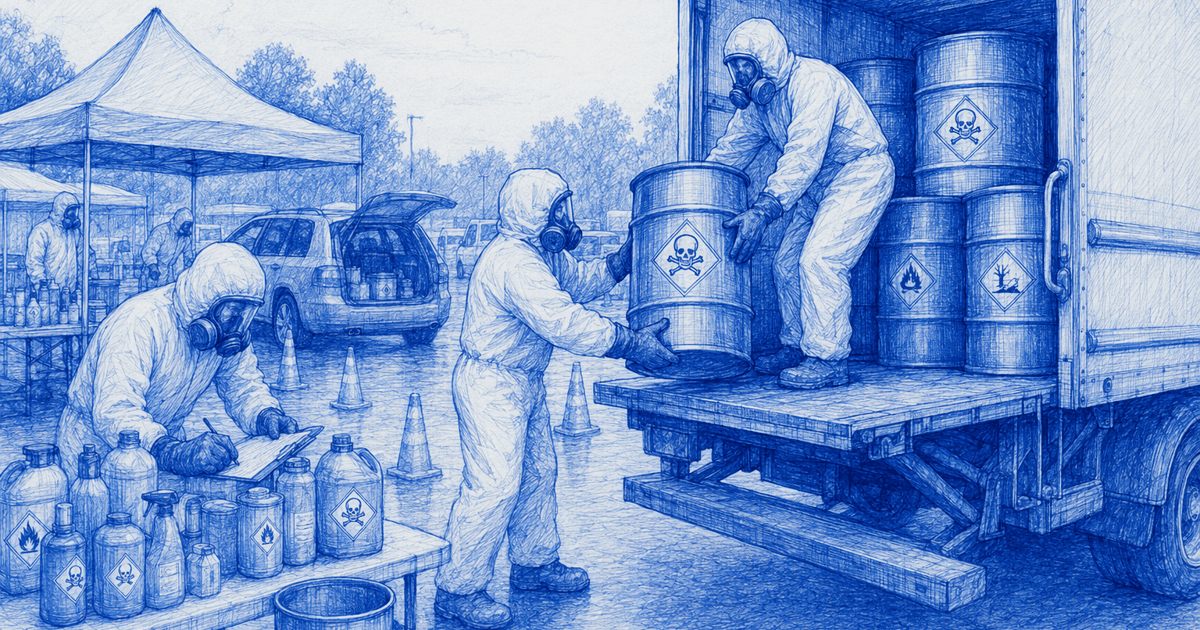
Clean Harbors pricing for a typical government job runs about $10,000 to $30,000 for a household hazardous waste collection event or an annual disposal contract, based on real purchase records Civic IQ tracked from 2022 through 2026. Small one-off pickups cost far less, and a large citywide program costs much more, because Clean Harbors quotes each job on the waste type and the volume rather than a fixed rate.
- The City of Baltimore, Maryland paid $245,000 for household hazardous waste collection and disposal (Civic IQ purchase records, August 2024).
- The City of Newburyport, Massachusetts paid $21,020 for a spill cleanup with drum removal and waste disposal (Civic IQ purchase records, December 2024).
- A single fleet-oil pickup ran the City of Corona, California just $232 (Civic IQ purchase records, September 2024).
- Annual repeat programs, like the Town of Medfield, Massachusetts, hold steady near $13,000 to $14,000 per year (Civic IQ purchase records, 2022 to 2025).
1. How much does Clean Harbors cost?
For most local governments, a Clean Harbors job lands between $10,000 and $30,000. That band covers the two things agencies buy most: a household hazardous waste collection day, or an annual contract to haul and dispose of chemicals, used oil, paint, and lab waste. Civic IQ’s records span a much wider range than that, though.
At the low end, a one-time fleet-oil or parts-washer pickup runs a few hundred dollars. The City of Corona, California paid $232 for a hazardous-materials pickup in September 2024 (Civic IQ purchase records). At the top end sits the City of Baltimore, Maryland at $245,000 for a full collection and disposal program in August 2024. Same vendor, a thousandfold difference in price.
Why so wide? Clean Harbors does not sell a product with a sticker. It quotes each job on the waste stream, how much of it there is, how far the truck drives, and how many technicians the site needs. So the honest answer to “how much” is “it depends on the job,” and the useful answer is the table of real numbers below.
2. What are governments actually paying for Clean Harbors? (2026 contract data)
These are real awarded amounts pulled from purchase records and invoices across cities, towns, counties, and school districts. Some rows are annual programs; others are single jobs. Each is labeled so you can compare like with like.
| Agency | Type | Service | Recorded amount | Basis |
|---|---|---|---|---|
| City of Baltimore, MD | City | Household hazardous waste collection and disposal | $245,000 | Program (Aug 2024) |
| City of Sheridan | City | Household hazardous chemical disposal | $30,000 | Per event (Jun 2024) |
| City of Newburyport, MA | City | Spill cleanup, drum removal, waste disposal | $21,020 | Per job (Dec 2024) |
| City of Imperial Beach, CA | City | Hazardous waste facility services | $18,000 | Annual (Jul 2024) |
| Town of Medfield, MA | Town | Household hazardous waste disposal | $14,031 | Per event (May 2025) |
| Pueblo County, CO | County | Hazardous waste disposal (Quote 4551657) | $10,893 | Per job (Mar 2024) |
| West Liberty University, WV | Higher ed | Laboratory chemical pickup | $3,803 | Per job (Jun 2024) |
| City of Corona, CA | City | Parts-washer maintenance and hazmat pickup | $232 | Per job (Sep 2024) |
Source: Civic IQ purchase records, 2024 to 2025.
3. What drives Clean Harbors’ price up or down?
The spread between $232 and $245,000 is not random. Four things move the number, and each shows up plainly in the records.
- Volume of waste. A single fleet-oil pickup ran the City of Corona, California $232 in September 2024, and Cumberland County paid $308 for the same kind of oil pickup that month. Scale that up to a citywide collection day and you reach the City of Sheridan’s $30,000 in June 2024, or Baltimore’s $245,000 program. Volume is the biggest lever.
- Mobilization and emergency response. Clean Harbors bills the truck roll and setup as its own line. Finneytown Local Schools paid $3,076 for “Task 1: Mobilization” alone in February 2025, before any disposal. Emergency spill jobs stack that fee on top, which is part of why the City of Newburyport’s spill cleanup hit $21,020 in December 2024.
- Waste type and profiling. Lab-pack chemical waste needs each container identified and packed drum by drum, so it costs more per drum than bulk used oil. Beaver Area School District paid $6,000 to clear high-school and middle-school lab chemicals in 2023, and West Liberty University paid $3,803 for a lab pickup in June 2024.
- One-off versus recurring. Agencies that call only when something goes wrong pay episodic rates. Agencies that run a standing annual program hold a steadier number, which is where the $13,000-to-$14,000 repeat pattern at the Town of Medfield, Massachusetts comes from.
4. How does Clean Harbors’ pricing compare to alternatives?
Two other names show up in government hazardous-waste records: US Ecology, a direct competitor on household hazardous waste and disposal, and Stericycle, which leans toward regulated medical waste and document destruction. Here is how the real numbers line up.
| Vendor | Real government figures | Best fit |
|---|---|---|
| Clean Harbors | $232 to $245,000; most jobs $10,000 to $30,000 | Full-service HHW plus spill response and lab-pack in one call |
| US Ecology | Washtenaw County, MI $345,000 (2025); Leon County, FL $135,000 (2020) | Large regional HHW and clean-sweep programs |
| Stericycle | Monterey County, CA $15,000 (2025); Denver airport $12,628 (2025) | Routine regulated-medical waste and document shredding |
Source: Civic IQ purchase records, 2020 to 2025.
Give credit where it is due. For narrow, recurring jobs like medical-sharps pickup or document destruction, Stericycle comes in cheaper, often in the mid-four figures to about $15,000 a year. US Ecology runs neck and neck with Clean Harbors on household hazardous waste, and on the largest regional programs it can cost more: Washtenaw County, Michigan spent $345,000 with US Ecology on its 2025 collections, above Baltimore’s Clean Harbors program. Where Clean Harbors tends to win is breadth. One vendor handles the collection day, the emergency spill at 2 a.m., and the lab cleanout later that week, so you are not juggling separate contracts for each.
5. Is Clean Harbors worth the price?
Verdict: for a city, county, school district, or utility that needs household hazardous waste, spill response, and lab disposal handled by one accountable vendor, Clean Harbors earns its price, as long as you buy on a program basis rather than one panicked call at a time.
The proof is in who keeps coming back. The Town of Medfield, Massachusetts ran Clean Harbors every single year from 2022 through 2025, paying $12,814, then $10,642, then $13,826, then $14,031. That is a four-year streak, not a one-time trial. The City of Imperial Beach, California shows the same loyalty, with hazardous-waste facility payments in 2020, 2022, 2023, and 2024, settling at $18,000 in the last two years. School districts like SD U-46 in Illinois appear across multiple years for chemical pickups too.
Agencies do not renew a hazardous-waste vendor four years running unless the manifests are clean and the audits pass. The catch is the same one that trips up first-time buyers everywhere: the emergency rate. If you only call when a drum leaks, you pay the mobilization fee and the rush every time. Set up a standing program, and better yet buy through a shared contract. Our guide to cooperative purchasing shows how to ride an existing award instead of running a fresh RFP, and if you want to time your bid for a renewal window, see how contract expiration tracking surfaces the incumbent’s end date early.
6. FAQ
Does Clean Harbors publish pricing?
No. Clean Harbors does not post a public price list. Every job is quoted on waste type, volume, distance, and labor, so two agencies can pay very different amounts for what looks like the same service. Civic IQ’s records close that gap with real awarded amounts, which run from a few hundred dollars for a single oil pickup to $245,000 for a large citywide collection program in 2024. The EPA guide to household hazardous waste is a useful primer on what actually needs this kind of disposal.
What is the largest Clean Harbors government contract on record?
In Civic IQ’s records, the largest single Clean Harbors line is the City of Baltimore, Maryland at $245,000 for household hazardous waste collection and disposal in August 2024. The next tier sits far below it, around $18,000 to $30,000 for annual programs in cities like Imperial Beach, California and Sheridan. For context on how these awards get published, Government Technology covers state and local environmental procurement regularly.
Does Clean Harbors offer government discounts?
Not as a published rate, but in practice yes. Agencies that buy through a cooperative purchasing contract or run an annual disposal program tend to lock steadier per-event pricing than one-off emergency callers. Repeat buyers like the Town of Medfield, Massachusetts, which ran Clean Harbors every year from 2022 through 2025, hold their household hazardous waste cost near $13,000 to $14,000 a year in Civic IQ’s records. To go the cooperative route, check whether the award qualifies as a sole-source or piggyback contract, review your state’s disposal rules through a portal like California’s Department of Toxic Substances Control, and lean on procurement resources from NIGP. If you are new to selling into this space, start with our complete guide to the SLED market.